This post is a little overdue – but I had a meeting with my main collaborator, Angus Lamond, on Tuesday evening. It was a very productive meeting, and I managed to greatly narrow down my area of focus.
Here are a couple of excerpts from the meeting transcript:
SG: I suppose one of the questions then is – how happy are you for me to push reality slightly if it makes [the film] more appealing to an audience?
AL: Having what you could call artistic licence – it really depends on what use you want to make of it. If you want to say to someone, ‘Here, as best we can tell, is how this happens or how it works,’ and you deliberately show something that we know isn’t how it works, then… I think you can do anything as long as you label it accurately, like if you want to say, ‘Here’s something intended to convey what’s going on.’ It might be that you want to simplify something because it’s either too complicated or even distracting to show everything or get too fussy about fine detail as opposed to saying, ‘I’m going to show the big picture of what’s happening without getting too uptight about the really fine detail, having every “i” dotted and “t” crossed.’ I don’t think that really matters – but you can’t call black white.
I think there’s a lot of scope for compromise, but obviously if you decide that you are wanting to give people who are watching an insight into a process that otherwise you couldn’t make sense of, couldn’t even get your head around or imagine what’s happening, then I think what’s important is to agree on: ‘What is the essence that you’re trying to communicate? What is important? Is it the relative scale of things, [or something else]?’
AL: There are other proteins – quite well known ones – which are being destroyed all the time, until something happens – like maybe the cell’s going to be a cancer cell – and then what you do is actually make that protein, or the cell gets damaged, has an accident – something goes wrong. And it’s like that protein is the emergency services – they come on the scene, do their job to fix the problem, and then go away again and get destroyed. So that could be another twist on it – you could say, ‘Well, why is that protein being made?’ And you could focus on one of the proteins, including some of the ones that we study, which – they’re actually made all the time, but almost immediately destroyed, until an accident happens inside the cell. And then you want a lot of the proteins, so you stop destroying them, and then you get a lot of the proteins, and then they can go and fix the problem.
As a result of the meeting, I have decided to focus on the life cycle of one of the tumour-suppressing “emergency services” proteins described above. Out of the different options discussed, this particular avenue has the most scope for compelling narrative. There is a clear beginning, middle and end: the protein is created, it resolves the crisis, and then it is destroyed.
At the moment I am considering the possibility of focusing specifically on a melanoma (skin cancer) prevention protein, as this means that the film could open with a live action element , for example: the film begins with a shot of a woman sunbathing in a deckchair – the camera then cuts or zooms in to show the effect that this is having on her DNA.
As long as it doesn’t look like a public service announcement!


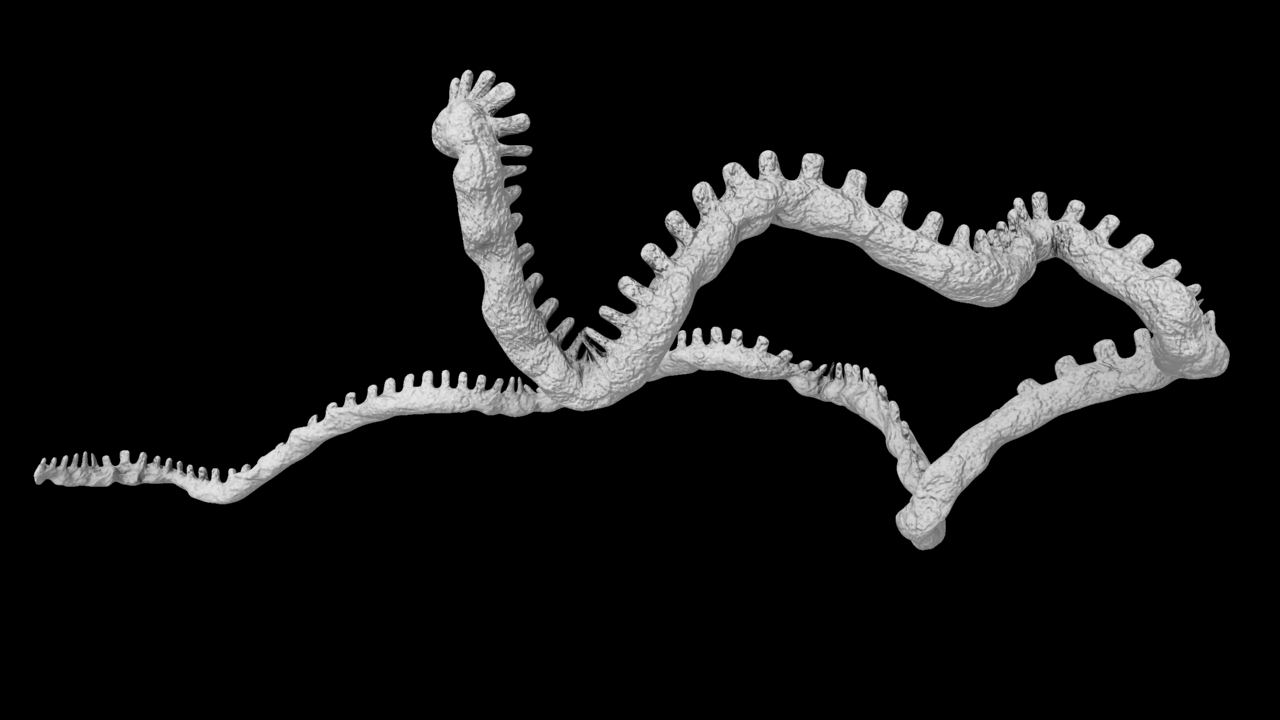
 Cell Shading